
!Female Hair Transplantation: Why Diagnostics and Methods Differ in Important Ways
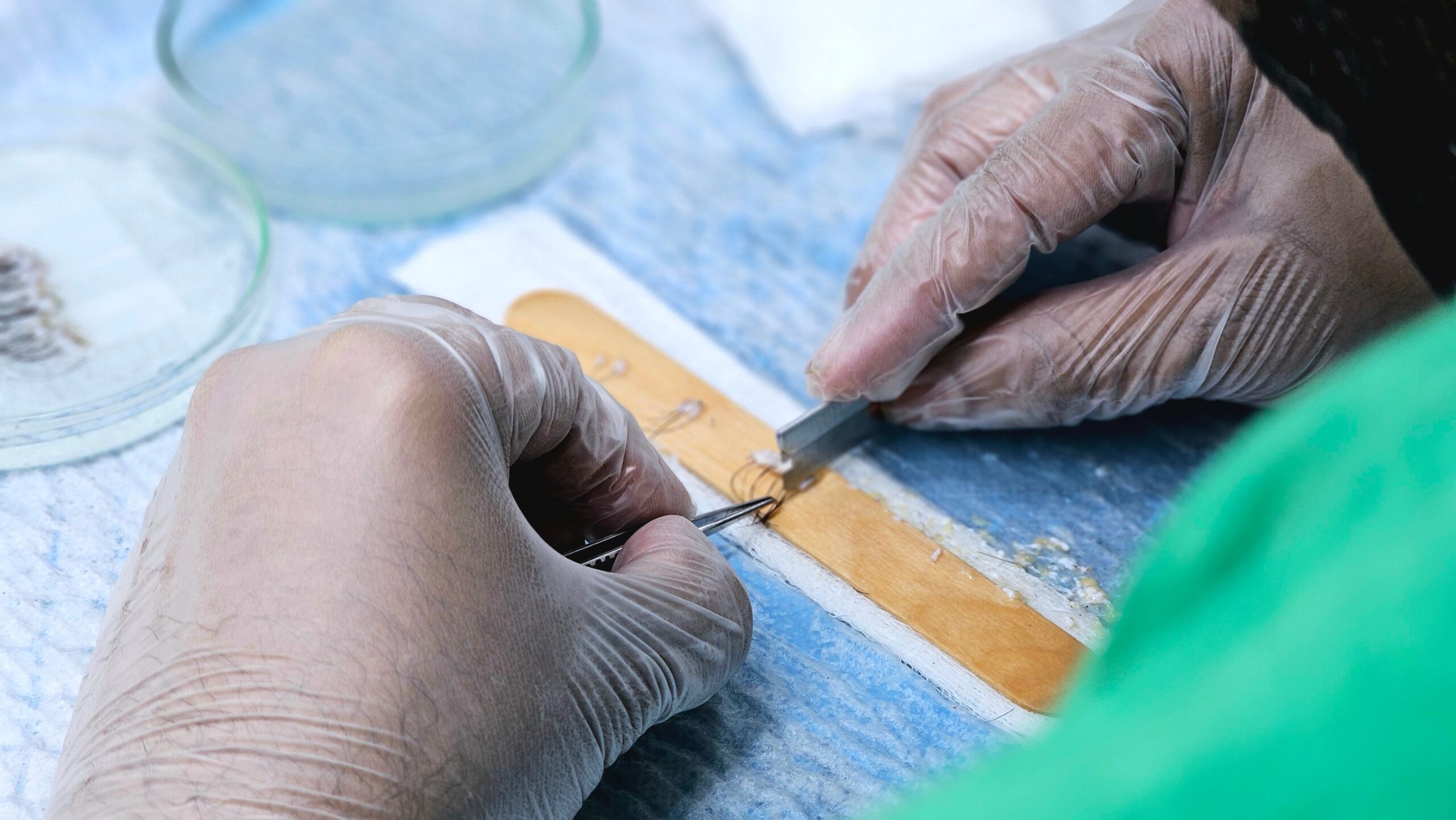
Photo: www.kaboompics.com via Pexels — Source
At 38, Amira S. sat in a consultation at a hair clinic in Istanbul when the doctor told her: „For you, this works differently than for men.“ No sentence captures the reality of female hair transplantation more precisely. Anyone who thinks the procedure is the same as for men — just with a different hairstyle — understands neither the diagnostics nor the biology behind it. Around 40% of all people affected by hair loss in Europe are women. Yet the majority of clinics, studies and method guidelines are aimed at male patients. This costs women time, money, and in the worst cases, permanent hair loss.
—
Why Female Hair Loss Is a Discipline of Its Own
Men lose hair in a predictable pattern: receding hairline, tonsure, Norwood Scale Types I to VII. This makes diagnosis and planning comparatively straightforward — the doctor immediately sees where transplantation is needed and which donor zone is stable enough.
Women lose hair diffusely. The typical finding: the hairline remains intact, but volume on the crown decreases over the years — first noticeable as a widening centre parting. The classic tool for this is the Ludwig Scale (Grade I to III), which describes this form of androgenetic hair loss in women. But it only captures a fraction of the actual causes.
A second problem: with diffuse thinning, the entire donor zone is often affected. Anyone losing hair from occiput to temporal regions has no stable extraction area — and therefore no basis for a transplantation. This point is alarmingly often overlooked in initial consultations.
—
Diagnostics: What Must Be on the Table Before Any Decision
A thorough female diagnostic workup takes at least 45 minutes and includes several examination steps. Anyone offered a surgery date in under 15 minutes should leave the clinic.
Trichoscopy: Digital microscopic examination of the scalp — it reveals the degree of miniaturisation, hair follicle density per cm², and the ratio of terminal to vellus hairs. A healthy area shows more than 80 hairs per cm². Values below 40 in the donor area mean: transplantation is not possible.
Pull Test: Simple but telling. The doctor pulls on 50–60 hairs — more than 6 hairs coming out indicates active hair loss. This test must be negative before surgery.
Blood Panel: Mandatory, not optional. At minimum: ferritin (target >70 µg/l), TSH, free T3/T4, oestradiol, testosterone, DHEAS, B12 and folic acid. In practice, ferritin values below 20 µg/l are frequently seen — this alone can trigger massive hair loss and makes transplantation contraindicated.
Scalp Biopsy: Rarely necessary, but essential if scarring alopecia is suspected (e.g. lichen planopilaris or frontal fibrosing alopecia). These forms categorically exclude transplantation.
[LINK: Hair Transplantation Preparation — Checklist for Your Initial Diagnosis]
—
The Most Common Causes in Women — and Which Allow Surgery
| Cause | Transplantation possible? | Notes |
|---|---|---|
| Androgenetic alopecia (Ludwig I–II) | Yes, with stable donor zone | Most common treatable form |
| Telogen effluvium (acute/chronic) | No (acute) / Conditional (chronic, stable) | Loss after stress, childbirth, crash diets |
| Traction alopecia | Yes | Along the hairline after years of tight braids |
| PCOS-related hair loss | Conditional | Hormonal stabilisation first, then surgical planning |
| Frontal fibrosing alopecia | No | Scarring — surgery worsens the condition |
| Alopecia areata | No | Autoimmune — grafts are attacked |
| Scar alopecia (post-op, burns) | Yes, specialised | Technically demanding, good outcomes |
The conclusion from this table: more than half of all conditions women present with at clinics are not transplantable — at least not immediately. Anyone who conceals this to sell a surgery date is acting recklessly.
—
Methods Compared: FUE, DHI and the Unshaved Technique
The standard methods FUE (Follicular Unit Extraction) and DHI (Direct Hair Implantation) fundamentally work for women too — but with crucial adaptations. [LINK: FUE vs DHI: Which Method Is Right for Me?]
Classic FUE: The donor area is shaved, individual follicular units are extracted with a punch needle (0.6–0.9 mm diameter) and inserted into pre-made channels. The problem for women: the shaved area is visible for weeks to months — for many, a psychological dealbreaker.
DHI (Choi Pen Method): Extraction and implantation in one step, higher graft survival rate (up to 95% versus 85–90% with standard FUE), denser placement possible. Preferred method for hairline corrections and the temple area.
Unshaved FUE / „Long Hair FUE“: The decisive advance for women. Extraction sites are not fully shaved — instead, individual sections are selectively trimmed, immediately covered by the surrounding hair. Requires more experience and time (surgery takes 30–40% longer), and costs correspondingly more — in Istanbul the surcharge is 300–600 €. For working women who need to be back in client meetings within two weeks, this is the only realistic option.
Donor Area Management: The most critical difference. In women, only a partial area is typically extracted (no full strip as with FUT). A maximum of 1,500–2,500 grafts per session is realistic with a stable donor zone — in men, 3,000–5,000 grafts are commonly extracted.
—
Realistic Figures: What a Female Hair Transplantation Costs
Cost transparency is lacking online. Here are the actual ranges from verified clinic offers in Istanbul (as of 2026):
| Service | Price range Istanbul | Germany (comparison) |
|---|---|---|
| Initial diagnosis + trichoscopy | 0–150 € | 80–250 € |
| FUE (1,000–2,000 grafts) | 1,200–2,200 € | 4,500–7,000 € |
| DHI (1,000–2,000 grafts) | 1,500–2,800 € | 5,000–8,500 € |
| Unshaved FUE | 1,800–3,200 € | 6,000–9,000 € |
| PRP treatment (add-on) | 200–400 € | 800–1,500 € |
| Flight + 3 nights hotel | 400–700 € | — |
Total costs in Istanbul including travel are therefore 2,000–4,500 € — compared to 5,000–10,000 € at German clinics for comparable services. [LINK: Hair Transplantation Costs 2026: What Does a FUE in Istanbul Cost?]
—
What Many Doctors Don’t Tell Women — But Should
Three points systematically missing from initial consultations:
Growth Cycle and Expectations: The transplanted hair falls out in the first 4–8 weeks (shock loss). This is not a failure — it is biology. Real results can only be assessed after 12–18 months. Anyone who gives up at 3 months or files a complaint simply wasn’t properly informed beforehand.
Supplementary Treatments as Necessity, Not Luxury: Minoxidil (2% for women), PRP injections and in some cases low-dose spironolactone increase the graft survival rate and protect remaining natural hair. Without accompanying therapy, 20–30% of the surgical result is wasted.
The Psychological Component: Hair loss in women is clinically more strongly associated with depression and social isolation than in men. Reputable clinics offer preparatory counselling — not as a nice extra, but because unrealistic expectations are the most common cause of dissatisfaction after a technically flawless surgery.
[LINK: Patient Reports: Women on Their Hair Transplantation in Istanbul]
—
Frequently Asked Questions
Do I have to be completely shaved for a female hair transplantation?
No. With the Unshaved FUE technique, only small areas in the donor zone are temporarily trimmed — immediately covered by the surrounding hair. The procedure is barely noticeable to outsiders right after surgery. Raise this point proactively in your initial consultation — not all clinics offer this technique as standard.
From what age does a hair transplantation make sense for women?
There is no minimum age, but there is a stability requirement: hair loss must have been stable for at least 12–18 months (no further loss). In women under 30, this is rarely the case — the focus here is first on identifying the underlying cause. Surgery before hormonal stabilisation is a waste of money.
How many grafts are typically needed for women?
This depends on the extent of thinning. Early crown thinning (Ludwig I) often requires 800–1,200 grafts. Advanced cases (Ludwig II–III) with a wider centre parting and beginning temple thinning may require 1,800–2,500 grafts. More than 3,000 grafts in a single session is rarely medically appropriate for women.
Can I use Minoxidil alongside a hair transplantation?
Yes — but with a time gap. Minoxidil should be stopped 2 weeks before surgery and resumed no earlier than 4 weeks after the procedure. This applies to the treated area. It can be continued on other areas.
How do I recognise a reputable clinic for female hair transplantation?
Three minimum criteria: trichoscopy in the initial consultation (not just photos), a complete blood panel as a prerequisite, and a doctor — not a technician — who leads the surgery and designs the operative plan. Clinics that sell package prices without individual diagnostics are playing with your health.
—
Next Step: Your Personal Diagnosis
Hair loss in women is not a matter of vanity — it is a medical problem with medical solutions. And the right solution does not begin with surgery, but with an honest diagnostic workup.
Book your free consultation with Hair360. Our partner doctors in Istanbul carry out trichoscopy, the pull test and blood panel screening — before you even consider scheduling a surgery. Because a transplantation that should not have happened is the most expensive one of all.
Get free advice now — no sales pressure, with genuine diagnostics.