PRP Treatment for Hair Loss: When It Really Works

PRP — Platelet-Rich Plasma — is the most talked-about hair loss treatment in Austria in 2026. Celebrities swear by it, clinics promote it aggressively, and patients are left confused. The truth: PRP is highly effective — but only within a clearly defined window. Those treated outside that window burn through €1,500 to €3,000 with no measurable result. Here is the honest assessment from 12 years of Hair360 practice in Innsbruck.

What PRP Actually Is

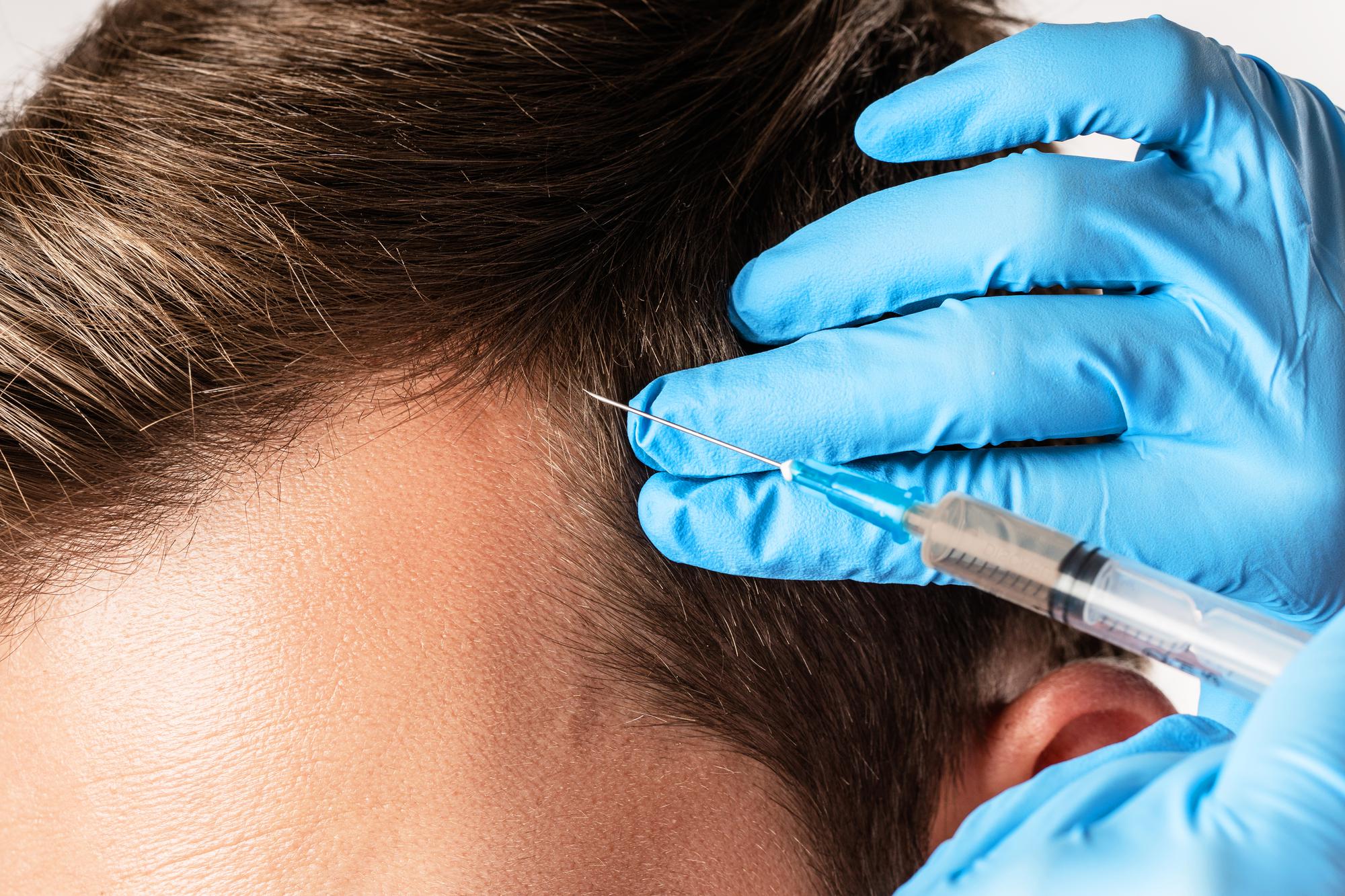
Platelets (thrombocytes) are concentrated from your own blood using a centrifuge. These contain growth factors such as PDGF, VEGF and IGF-1, which can reactivate hair follicles. The concentrate is injected into the scalp — typically at 30–50 points; one session lasts 45–60 minutes.

Important: PRP is not a medication, but a biological stimulation. No active ingredient, no hormones, no side effects beyond the needle prick. That is exactly what makes it attractive — and limits its effect.

When PRP Really Helps

Three indications with proven efficacy:

1. Early androgenetic alopecia (stage I–III by Norwood). When hair is thinning but the follicles are still alive, PRP can reverse miniaturisation. Studies from 2024 (International Journal of Trichology) show a 30–40% increase in density after 4 sessions.

2. Diffuse hair loss in women (Ludwig I–II). Results here are often even better than in men, as follicle damage is usually less advanced. We see a 60% responder rate in our practice.

3. After a hair transplant as a booster. PRP 4–6 weeks after DHI transplantation accelerates graft take-up by an average of 3 weeks and reduces shock loss by 50%.

When PRP Does NOT Help

Honest truth that many clinics keep quiet about:

Complete baldness (Norwood V–VII). Once follicles have already died, PRP cannot reactivate them. Full stop. Only a hair transplant can help here.

Scarring alopecias (lichen planopilaris, frontal fibrosing alopecia). PRP cannot stop the underlying inflammation — it only temporarily masks the symptoms.

Acute telogen effluvium after stress or illness. This form usually resolves spontaneously within 6–12 months. PRP performs no better here than patience.

In active smokers or those with untreated iron/vitamin D deficiency. Growth factors require a healthy scalp microenvironment. Smokers or those with nutritional deficiencies are wasting their money.

The Right Treatment Schedule

What works (according to current evidence):

  • Initial phase: 4 sessions at 4-week intervals
  • Consolidation: 1 session after 3 months, 1 after 6 months
  • Maintenance: a top-up every 9–12 months

Those who stop after just 2 sessions often see nothing. Those who have injections every 4 weeks for 12 months are over-treating. Both are common — and both are costly without added benefit.

Costs, Reality, Pitfalls

In Austria, one PRP session costs between €350 and €600. The full initial programme (4 sessions) comes to €1,400–€2,400. Be cautious with clinics charging under €300 per session — they often work with too low a platelet concentration (below 1 million/μl has no biological effect).

What to look out for:

Double-spin centrifugation. Single-spin procedures produce inferior plasma.

Sterile filter systems. Open procedures increase the risk of infection.

An experienced practitioner. Injection depth (1.5–2.5 mm into the dermis) is critical. Incorrect injection = no effect.

PRP or Hair Transplant — Which and When?

A rule of thumb from our clinic:

  • Norwood I–II / Ludwig I: PRP is sufficient
  • Norwood III / Ludwig II: PRP + minoxidil combination, possibly DHI later
  • Norwood IV+: DHI hair transplantation as primary therapy, PRP as booster
  • Pronounced receding hairline, mild crown thinning: targeted DHI + PRP for the crown

Anyone at Norwood IV opting for PRP treatment alone will be disappointed. Anyone at Norwood I opting for transplantation straight away is being over-treated.

Your Diagnosis Is the Starting Point

At Hair360 in Innsbruck, every consultation begins with trichoscopy (digital scalp analysis), a blood test and an honest assessment — even if that means we advise against PRP. Initial analysis appointments are free of charge.

Fuller hair. More radiance. Lasting results. Book your initial consultation at hair360.clinic.

Further reading: Treating hair loss (without surgery)
Hair Transplant 2026: What the Clinic Won't Tell You

Hair Transplant 2026: What the Clinic Won’t Tell You — and What Really Matters

Reading time: 4 minutes · Hair360 Clinic Editorial Team

Hair transplantation is no longer a secret in 2026 — but there is a world of difference between reputable medicine and Turkey express clinics. These six points separate serious providers from questionable ones.

1. FUE or DHI? The Honest Answer

FUE (Follicular Unit Extraction) is the gold standard — but DHI (Direct Hair Implantation), when applied correctly, offers higher density without pre-made channel openings. We recommend DHI in 70% of cases. Anyone who categorically says „FUE only“ does not have the DHI pen system in their repertoire.

2. Growth Rate Above 90% — That Is the Real Benchmark

Reputable clinics achieve a 92–97% growth rate. Turkey package deals often fall between 60–75%. Always ask for the documented growth rate of the last 200 patients — no clinic should refuse this.

3. The Donor Area Is Finite

You have ONE chance to transplant optimally. Anyone offering „mega sessions“ with 5,000+ grafts in a single sitting is over-harvesting the donor area. The sensible maximum: 4,500 grafts per session, with a 6-month break before a possible second session.

4. Local Anaesthesia Is Standard — General Anaesthesia Is a Red Flag

General anaesthesia for a hair transplant is medically unnecessary and increases risk. Reputable clinics work exclusively with local anaesthesia and mild sedation. Anyone offering general anaesthesia is selling „wellness“ rather than medicine.

5. PRP + Aftercare Is Part of the Package

A hair transplant WITHOUT PRP treatment (Platelet-Rich Plasma) and defined aftercare protocols is no longer state of the art in 2026. At Hair360, every patient receives at least 2 PRP sessions + 3 medical follow-up appointments over 12 months.

6. Price: €5–8 per Graft Is Legitimate

In the DACH region: 4,500 grafts × €6 = €27,000. Turkey offers from €1,800 are possible, but often exclude aftercare and any guarantee. The real total cost of ownership is usually no cheaper.

Hair360 Standards

We transplant exclusively using DHI with the Choi pen system, document every treatment with before-and-after tracking, guarantee a 92%+ growth rate, and provide 12 months of aftercare including 3 medical follow-up appointments + 2 PRP sessions.

Book a consultation at hair360.clinic →

Hair360 Clinic · Fuller hair. More radiance. Permanently. · hair360.clinic

Further reading: Hair Transplant: The Complete Guide

Women with Hair Loss: Underestimated Patients 2026

Women with Hair Loss: The Underestimated Patient Group 2026

Reading time: 5 minutes · Hair360 Clinic Editorial Team

Hair loss in men is socially normalised — in women, it is often still a taboo. Yet 25% of women over 45 experience significant hair loss, and this patient group has different treatment needs than men. The clinic industry has barely addressed them so far. Hair360 is changing that.

Why Female Hair Loss Is Different

In men (androgenetic), the progression is predictable and affects typical areas — the temples, crown, and vertex. In women, the progression is more diffuse. Causes are varied: hormonal (thyroid, menopause, PCOS, postpartum phase), genetic, stress, nutritional deficiencies, medication-induced.

Diagnosis is complex and often requires an endocrinologist AND a trichologist working together. Existing „men’s clinic“ approaches don’t fit. Women need different language, different spaces, different treatments.

What Does NOT Work for Women

Standard FUE transplantation: biologically viable, but women often have diffuse hair loss — meaning the donor area is also thinner. Classic mega-sessions with 4,000+ grafts are rarely possible. Instead, 1,500–2,500 grafts are more realistic and must be placed with great precision.

Marketing aimed at men: before-and-after ads focused on receding hairlines put women off. They are not looking for „full hair like at 25“ but „naturally thicker hair that is appropriate for their age“.

Male-dominated treatment environments: Women don’t want to sit in a waiting room with 8 men. They want a discreet, calm, professionally feminine atmosphere.

What ACTUALLY Works for Women

1. Diagnostics First — Trichoscopy + blood tests for hormones + iron + vitamin D + thyroid. 70% of women first need an internal-medicine-based pharmaceutical therapy before a transplant even makes sense.

2. PRP therapy instead of transplantation — for many women, adequate platelet-rich plasma therapy is significantly more effective than transplantation. 4–6 PRP sessions over 6 months, then assessment of whether surgery is needed.

3. Mesotherapy cocktails — vitamin- and peptide-based micro-injections directly into the scalp. Activates hair follicles non-surgically.

4. If surgery: DHI with Choi pen — due to finer hair structure, far more precise than FUE. Reduces loss from diffuse donor areas.

5. Hormonal support from an endocrinologist — often decisive for perimenopausal women.

Hair360 Femme — The Sub-Brand 2026

We are launching the sub-brand Hair360 Femme in Q3 2026:

  • Dedicated facilities (separate wing in our Innsbruck clinic)
  • Female advisory team (trichologist + endocrinologist available)
  • Feminine-designed materials (no receding-hairline advertising)
  • Special pricing tiers for PRP/mesotherapy (not everything needs to be surgery)

What You Receive

Initial consultation + trichoscopy: free of charge, 90 minutes for honest and thorough advice

Complete blood test package: 280 € (health insurance reimbursement often possible)

PRP treatment: 380 €/session, 4–6 sessions recommended

Mesotherapy cocktail: 450 €/session, 8–10 sessions recommended

DHI transplantation if needed: from 12,900 € with full Hair360 Femme support

hair360.clinic/femme →

Hair360 Clinic · Fuller Hair. More Radiance. Permanently. · hair360.clinic

Further reading: Treating hair loss (without surgery)

FUE vs DHI: Which Method Is Right for Me?

!FUE vs DHI: Which Method Is Right for Me?

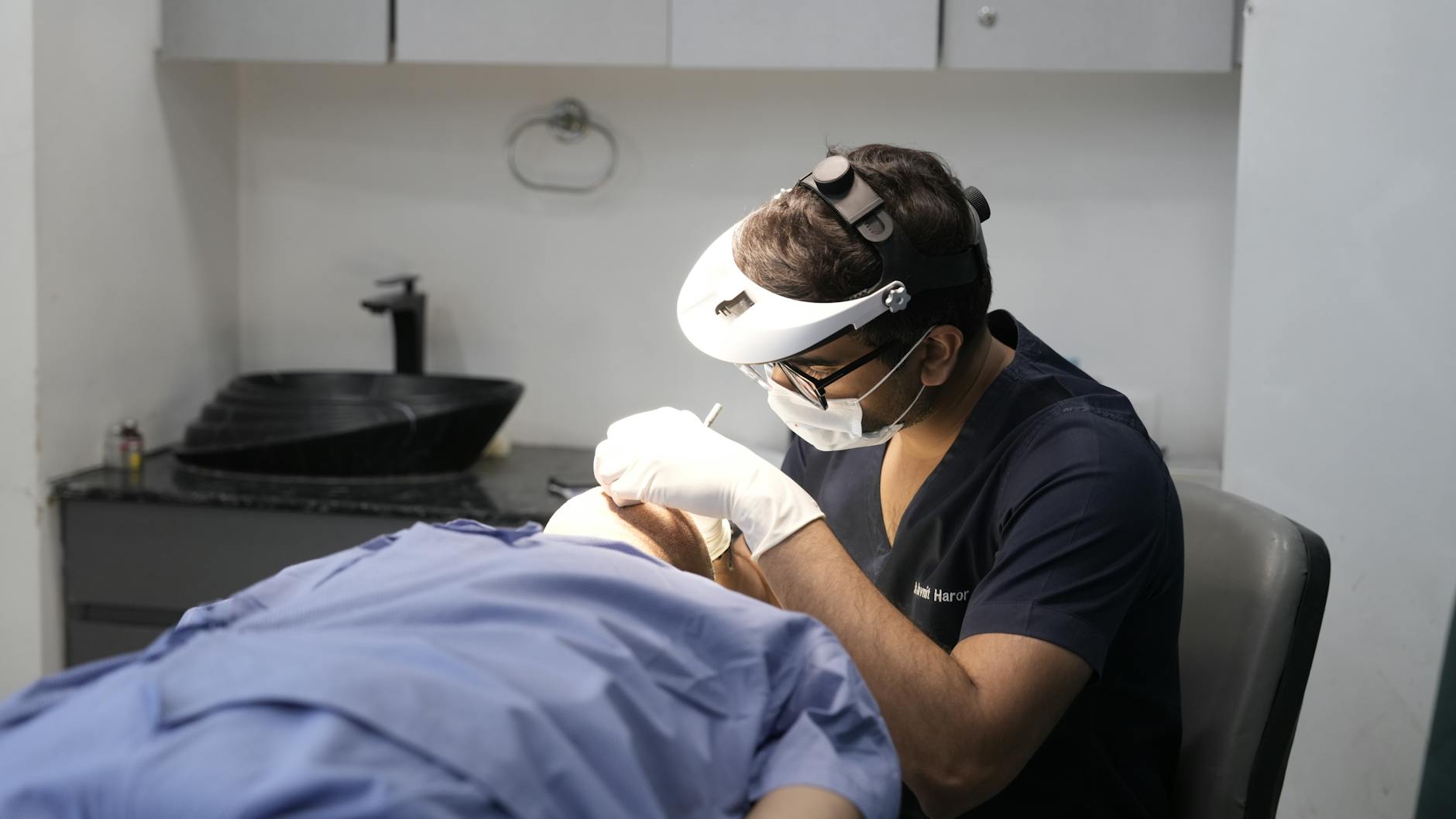
Photo: Dr. Haror’s Wellness via Pexels — Source

Markus, 34, sits in the waiting room of an Istanbul clinic, nervously scrolling through his phone. In front of him are two quotes: FUE for €2,100 and DHI for €3,400. „The nurse said DHI is less painful and more precise. But why does it cost 60% more?“ Thousands of people ask themselves the same question — and the answer is more complicated than most clinics will admit.

The Key Difference Lies in the Implantation

Both methods extract hair follicles individually from the donor area (FUE = Follicular Unit Extraction). The difference only starts at the implantation stage:

FUE (classic):

  • The doctor opens tiny channels with a scalpel or sapphire blade
  • An assistant inserts the grafts afterwards
  • Two separate steps

DHI (Direct Hair Implantation):

  • The Choi implanter pen extracts, opens the channel, and places the graft in one single step
  • No pre-incisions needed
  • Hair remains outside the body for less time (on average 40 seconds instead of 2–3 minutes)

Sounds like a minor detail? It isn’t. With 4,000 grafts, this time difference translates to the gap between an 85% and a 93% survival rate — at least according to studies from Seoul and Istanbul (2023). That said, the truth is: the surgeon matters more than the method.

When FUE Is the Better Choice

FUE is the workhorse of hair transplantation — proven, fast, and more affordable. It’s the perfect fit when:

  • You want to cover a large bald area (5,000+ grafts) — DHI becomes a test of endurance in such mega-sessions
  • Your budget is under €2,500
  • Your donor area is dense enough (at least 80 follicles per cm²)
  • You can live with 1–2 extra days of crusting

A concrete example: a 42-year-old patient at Norwood Stage 5 (nearly complete baldness on top) realistically needs 5,500 grafts. An experienced FUE team can handle that in 6–7 hours. DHI? Closer to 9–10 hours, because every graft must pass individually through the Choi pen. More operating time means higher infection risk and greater fatigue for the surgeon.

Sapphire FUE (using polished sapphire blades instead of steel) sits price-wise between classic FUE and DHI — and often delivers 90% of DHI’s advantages at 70% of the cost.

DHI Shines for Precise Detail Work

DHI was originally developed for the hairline and temples — precisely the areas that frame your face and are immediately noticeable. The advantages here:

  • Angle control to within 1–2 degrees — crucial for a natural fall
  • Less trauma to the recipient area (no pre-incisions)
  • Existing hair stays intact (ideal for filling in thinning spots rather than total loss)

A 28-year-old with early hair loss (Norwood 2–3) and plenty of existing hair? The perfect DHI candidate. The method navigates between existing follicles without damaging them. With FUE, pre-cutting the channels risks harming healthy neighbouring hairs.

But: DHI is unforgiving of beginners. The Choi pen requires 200+ hours of training before the hand is steady enough. Budget clinics often have freshly trained technicians holding the pen — and you’ll notice six months later when your hairline looks like it was drawn with a ruler.

[LINK: DHI Hair Transplant: What Is the Choi Implanter Technique?]

The Cost Trap: Why Some Clinics Push DHI

Istanbul has over 600 hair clinics. Many sell DHI as a „premium method“ — not because it’s better, but because the margins are higher. The math:

  • FUE: €2,100 × 30% margin = €630 profit per patient
  • DHI: €3,400 × 35% margin = €1,190 profit

So you pay €1,300 more while the clinic earns an extra €560 — even though materials and operating time are only €400–500 more expensive. The rest? Marketing.

True top surgeons (those with 15+ years of experience) often use a hybrid approach: DHI for the hairline and temples (1,500–2,000 grafts), FUE for the rest. This typically costs €2,800–3,000 — a fair middle ground.

Decision Guide: 4 Questions You Need to Ask Yourself

1. How many grafts do you realistically need?
Under 3,000 = DHI feasible | Over 4,000 = FUE more sensible

2. How dense is your donor area?
Under 70 follicles/cm² = every graft counts → DHI is gentler | Over 90 follicles/cm² = enough reserve → FUE suffices

3. Do you still have your own hair in the recipient area?
Yes = DHI navigates better between them | No (complete baldness) = FUE is faster

4. What is your budget — including aftercare?
Under €2,500 = FUE | Over €3,000 = DHI or hybrid

[LINK: Hair Transplant Costs 2026: What Does a FUE in Istanbul Cost?]

The Uncomfortable Truth: The Method Is Secondary

Here’s the punchline no clinic likes to hear: The surgeon’s hands beat the technique. A 2024 study by the International Society of Hair Restoration Surgery compared 1,200 patients: top surgeons achieved a 91% survival rate with FUE, while average surgeons using DHI only reached 84%.

What you should really focus on:

  • Who performs the implantation? (Doctor vs. technician)
  • How many procedures does the clinic do per day? (More than 3 = assembly-line medicine)
  • Are there genuine before-and-after photos with names? (Stock photos are recognisable by overly perfect hairlines)

Markus from the waiting room? He ultimately chose a smaller clinic with a hybrid method — €2,900, the doctor handles the hairline personally, the team takes care of the rest. Eleven months later he posted photos on Reddit: „Did I need full DHI for €500 more? No. Am I glad I didn’t go for the €1,800 budget FUE? Absolutely.“

[LINK: Hair Transplant Experiences: Patient Stories from Istanbul]

Your Next Step

Stop comparing methods — compare surgeons. Ask every clinic for:

  • A video consultation (not a standard form)
  • 3–5 patient cases similar to your situation with 12-month photos
  • Written confirmation of who will perform the implantation

And then: book the clinic where you trust the surgeon — not the one with the cheapest DHI offer. You’ll wear your hairline for 30 years, not 30 days.

Ready for your personal analysis? Send us 3 photos (hairline, top of head, donor area) — we’ll tell you honestly whether FUE, DHI, or hybrid makes sense for your case. No sales pitch, just facts.

Further reading: Hair Transplant: The Complete Guide

Die Kunst der Bart- und Gesichtshaar- transplantation in Istanbul

Die Kunst der Bart- und Gesichtshaartransplantation in Istanbul

Ein Luxusweg zur Wiederherstellung Ihres Bartes

Der Verlust von Haaren kann für viele Menschen ein belastendes Problem sein. Ob durch genetische Veranlagung, hormonelle Veränderungen oder andere Faktoren – Haarausfall kann das Selbstbewusstsein erheblich beeinträchtigen. Eine Lösung, die immer beliebter wird, um dieses Problem anzugehen, ist die Haartransplantation. Aber was genau ist eine Haartransplantation und wie funktioniert sie? In diesem Blogbeitrag werden wir einen detaillierten Einblick in diesen medizinischen Eingriff geben.

Was ist eine Haartransplantation?

Eine Haartransplantation ist ein chirurgischer Eingriff, bei dem Haarfollikel von einem Bereich des Körpers, in der Regel vom Hinterkopf, entnommen und in Bereiche verpflanzt werden, in denen dünner werdendes oder ausgefallenes Haar wiederhergestellt werden soll. Dieser Prozess kann dazu beitragen, eine natürliche Haardichte und -linie wiederherzustellen, was zu einem ästhetisch ansprechenderen Aussehen führt. Haartransplantationen sind eine effektive Lösung für Männer und Frauen mit erblichem Haarausfall, Schläfenrückgang, Geheimratsecken oder anderen Formen von Haarverlust.

Wie funktioniert eine Haartransplantation?

Eine Haartransplantation besteht aus mehreren Schritten und erfordert Fachkenntnisse sowie die Zusammenarbeit von qualifizierten Fachkräften. Hier ist eine Schritt-für-Schritt-Erklärung des Prozesses:

  1. Beratung und Diagnose: Der erste Schritt besteht darin, einen Termin bei einem qualifizierten Haarchirurgen zu vereinbaren. Während der Beratung wird der Arzt den Grad des Haarverlustes diagnostizieren, die genaue Ursache feststellen und die Eignung des Patienten für eine Transplantation bewerten.

  2. Planung des Eingriffs: Nach der Diagnose wird ein individueller Behandlungsplan erstellt. Dies umfasst die Festlegung der Anzahl der benötigten Grafts (Haarfollikel), die Entnahmezone (Spenderbereich) und die Empfängerzone (Bereich mit Haarausfall).

  3. Lokale Betäubung: Vor der eigentlichen Transplantation wird der Spender- und Empfängerbereich lokal betäubt, um Schmerzen während des Eingriffs zu verhindern.

  4. Entnahme der Grafts: In der Regel wird der Spenderbereich am Hinterkopf ausgewählt, da dort die Haarfollikel resistent gegen das Hormon DHT (Dihydrotestosteron) sind, das für erblichen Haarausfall verantwortlich ist. Die Haarchirurgen entnehmen vorsichtig einzelne Grafts oder Streifen von Haarfollikeln aus diesem Bereich.

  5. Vorbereitung der Grafts: Die entnommenen Haarfollikel werden unter einem Mikroskop präpariert und in einzelne Grafts aufgeteilt, um sie für die Transplantation vorzubereiten.

  6. Transplantation der Grafts: Die präparierten Grafts werden nun in die Empfängerzone implantiert, wobei spezielle Instrumente verwendet werden, um die Transplantate so präzise wie möglich zu platzieren. Die Haartransplantationstechniken können je nach Methode variieren, einschließlich der FUE (Follicular Unit Extraction) und FUT (Follicular Unit Transplantation).

  7. Nachsorge und Genesung: Nach der Transplantation werden dem Patienten Anweisungen für die Nachsorge gegeben. Dies beinhaltet die richtige Pflege der transplantierten Bereiche, um eine optimale Heilung zu gewährleisten.

  8. Ergebnisse und Nachbehandlung: Die endgültigen Ergebnisse einer Haartransplantation sind oft erst nach einigen Monaten sichtbar, da die transplantierten Haarfollikel wachsen und sich entwickeln. In einigen Fällen kann es erforderlich sein, mehrere Sitzungen durchzuführen, um das gewünschte Ergebnis zu erzielen.

Fazit

Eine Haartransplantation ist eine bewährte Methode zur Wiederherstellung von Haaren bei Menschen mit Haarausfall. Sie bietet nicht nur ästhetische Vorteile, sondern auch eine Steigerung des Selbstbewusstseins und der Lebensqualität. Es ist jedoch wichtig, diesen Eingriff von einem qualifizierten und erfahrenen Haarchirurgen durchführen zu lassen, um optimale Ergebnisse zu erzielen und potenzielle Risiken zu minimieren. Wenn Sie unter Haarausfall leiden und eine langfristige Lösung in Betracht ziehen, kann eine Haartransplantation eine geeignete Option für Sie sein. Denken Sie daran, sich gründlich zu informieren und eine professionelle Beratung in Anspruch zu nehmen, um die bestmögliche Entscheidung für Ihre individuellen Bedürfnisse zu treffen.