
!FUE vs DHI: Which Method Is Right for Me?
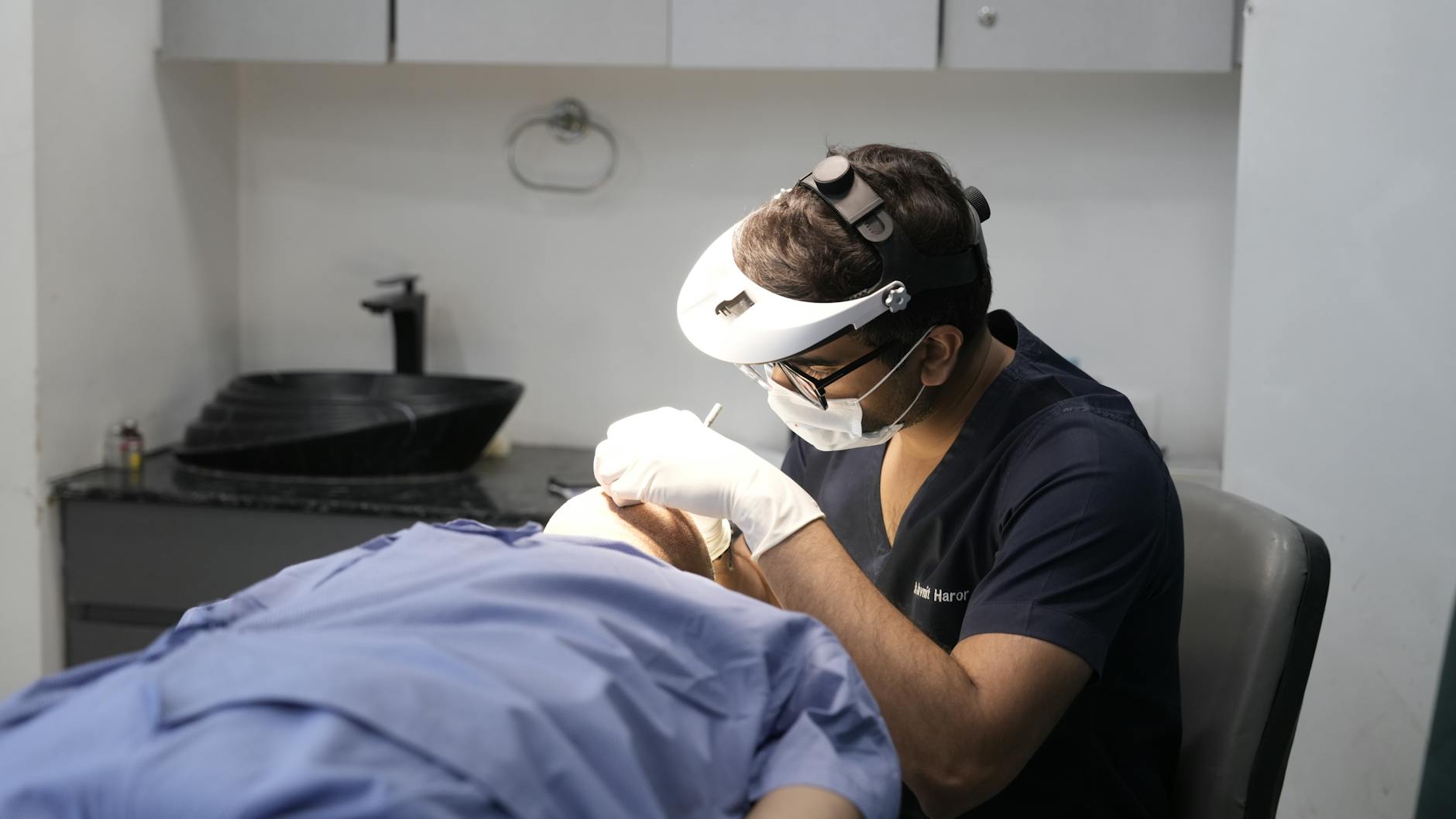
Photo: Dr. Haror’s Wellness via Pexels — Source
Markus, 34, sits in the waiting room of an Istanbul clinic, nervously scrolling through his phone. In front of him are two quotes: FUE for €2,100 and DHI for €3,400. „The nurse said DHI is less painful and more precise. But why does it cost 60% more?“ Thousands of people ask themselves the same question — and the answer is more complicated than most clinics will admit.
The Key Difference Lies in the Implantation
Both methods extract hair follicles individually from the donor area (FUE = Follicular Unit Extraction). The difference only starts at the implantation stage:
FUE (classic):
- The doctor opens tiny channels with a scalpel or sapphire blade
- An assistant inserts the grafts afterwards
- Two separate steps
DHI (Direct Hair Implantation):
- The Choi implanter pen extracts, opens the channel, and places the graft in one single step
- No pre-incisions needed
- Hair remains outside the body for less time (on average 40 seconds instead of 2–3 minutes)
Sounds like a minor detail? It isn’t. With 4,000 grafts, this time difference translates to the gap between an 85% and a 93% survival rate — at least according to studies from Seoul and Istanbul (2023). That said, the truth is: the surgeon matters more than the method.
When FUE Is the Better Choice
FUE is the workhorse of hair transplantation — proven, fast, and more affordable. It’s the perfect fit when:
- You want to cover a large bald area (5,000+ grafts) — DHI becomes a test of endurance in such mega-sessions
- Your budget is under €2,500
- Your donor area is dense enough (at least 80 follicles per cm²)
- You can live with 1–2 extra days of crusting
A concrete example: a 42-year-old patient at Norwood Stage 5 (nearly complete baldness on top) realistically needs 5,500 grafts. An experienced FUE team can handle that in 6–7 hours. DHI? Closer to 9–10 hours, because every graft must pass individually through the Choi pen. More operating time means higher infection risk and greater fatigue for the surgeon.
Sapphire FUE (using polished sapphire blades instead of steel) sits price-wise between classic FUE and DHI — and often delivers 90% of DHI’s advantages at 70% of the cost.
DHI Shines for Precise Detail Work
DHI was originally developed for the hairline and temples — precisely the areas that frame your face and are immediately noticeable. The advantages here:
- Angle control to within 1–2 degrees — crucial for a natural fall
- Less trauma to the recipient area (no pre-incisions)
- Existing hair stays intact (ideal for filling in thinning spots rather than total loss)
A 28-year-old with early hair loss (Norwood 2–3) and plenty of existing hair? The perfect DHI candidate. The method navigates between existing follicles without damaging them. With FUE, pre-cutting the channels risks harming healthy neighbouring hairs.
But: DHI is unforgiving of beginners. The Choi pen requires 200+ hours of training before the hand is steady enough. Budget clinics often have freshly trained technicians holding the pen — and you’ll notice six months later when your hairline looks like it was drawn with a ruler.
[LINK: DHI Hair Transplant: What Is the Choi Implanter Technique?]
The Cost Trap: Why Some Clinics Push DHI
Istanbul has over 600 hair clinics. Many sell DHI as a „premium method“ — not because it’s better, but because the margins are higher. The math:
- FUE: €2,100 × 30% margin = €630 profit per patient
- DHI: €3,400 × 35% margin = €1,190 profit
So you pay €1,300 more while the clinic earns an extra €560 — even though materials and operating time are only €400–500 more expensive. The rest? Marketing.
True top surgeons (those with 15+ years of experience) often use a hybrid approach: DHI for the hairline and temples (1,500–2,000 grafts), FUE for the rest. This typically costs €2,800–3,000 — a fair middle ground.
Decision Guide: 4 Questions You Need to Ask Yourself
1. How many grafts do you realistically need?
Under 3,000 = DHI feasible | Over 4,000 = FUE more sensible
2. How dense is your donor area?
Under 70 follicles/cm² = every graft counts → DHI is gentler | Over 90 follicles/cm² = enough reserve → FUE suffices
3. Do you still have your own hair in the recipient area?
Yes = DHI navigates better between them | No (complete baldness) = FUE is faster
4. What is your budget — including aftercare?
Under €2,500 = FUE | Over €3,000 = DHI or hybrid
[LINK: Hair Transplant Costs 2026: What Does a FUE in Istanbul Cost?]
The Uncomfortable Truth: The Method Is Secondary
Here’s the punchline no clinic likes to hear: The surgeon’s hands beat the technique. A 2024 study by the International Society of Hair Restoration Surgery compared 1,200 patients: top surgeons achieved a 91% survival rate with FUE, while average surgeons using DHI only reached 84%.
What you should really focus on:
- Who performs the implantation? (Doctor vs. technician)
- How many procedures does the clinic do per day? (More than 3 = assembly-line medicine)
- Are there genuine before-and-after photos with names? (Stock photos are recognisable by overly perfect hairlines)
Markus from the waiting room? He ultimately chose a smaller clinic with a hybrid method — €2,900, the doctor handles the hairline personally, the team takes care of the rest. Eleven months later he posted photos on Reddit: „Did I need full DHI for €500 more? No. Am I glad I didn’t go for the €1,800 budget FUE? Absolutely.“
[LINK: Hair Transplant Experiences: Patient Stories from Istanbul]
Your Next Step
Stop comparing methods — compare surgeons. Ask every clinic for:
- A video consultation (not a standard form)
- 3–5 patient cases similar to your situation with 12-month photos
- Written confirmation of who will perform the implantation
And then: book the clinic where you trust the surgeon — not the one with the cheapest DHI offer. You’ll wear your hairline for 30 years, not 30 days.
Ready for your personal analysis? Send us 3 photos (hairline, top of head, donor area) — we’ll tell you honestly whether FUE, DHI, or hybrid makes sense for your case. No sales pitch, just facts.
Further reading: Hair Transplant: The Complete Guide